

Join our Storm Squad
Because Posidonia is a protected species classified as endangered in many NSW estuaries, one of the greatest challenges for restoration is finding donor shoots for revegetate damaged areas.
Operation Posidonia has come up with an exciting solution to this problem, but it relies on getting help from local communities.
We are asking 'citizen scientists' to collect donor shoots from their local beach.
Living, green Posidonia shoots often wash ashore after storms, where they will soon perish unless returned underwater. Citizen scientists can collect these detached seagrass shoots and bring them to one of our collection spots. We will then use these shoots to restore seagrass populations without damaging existing Posidonia meadows.
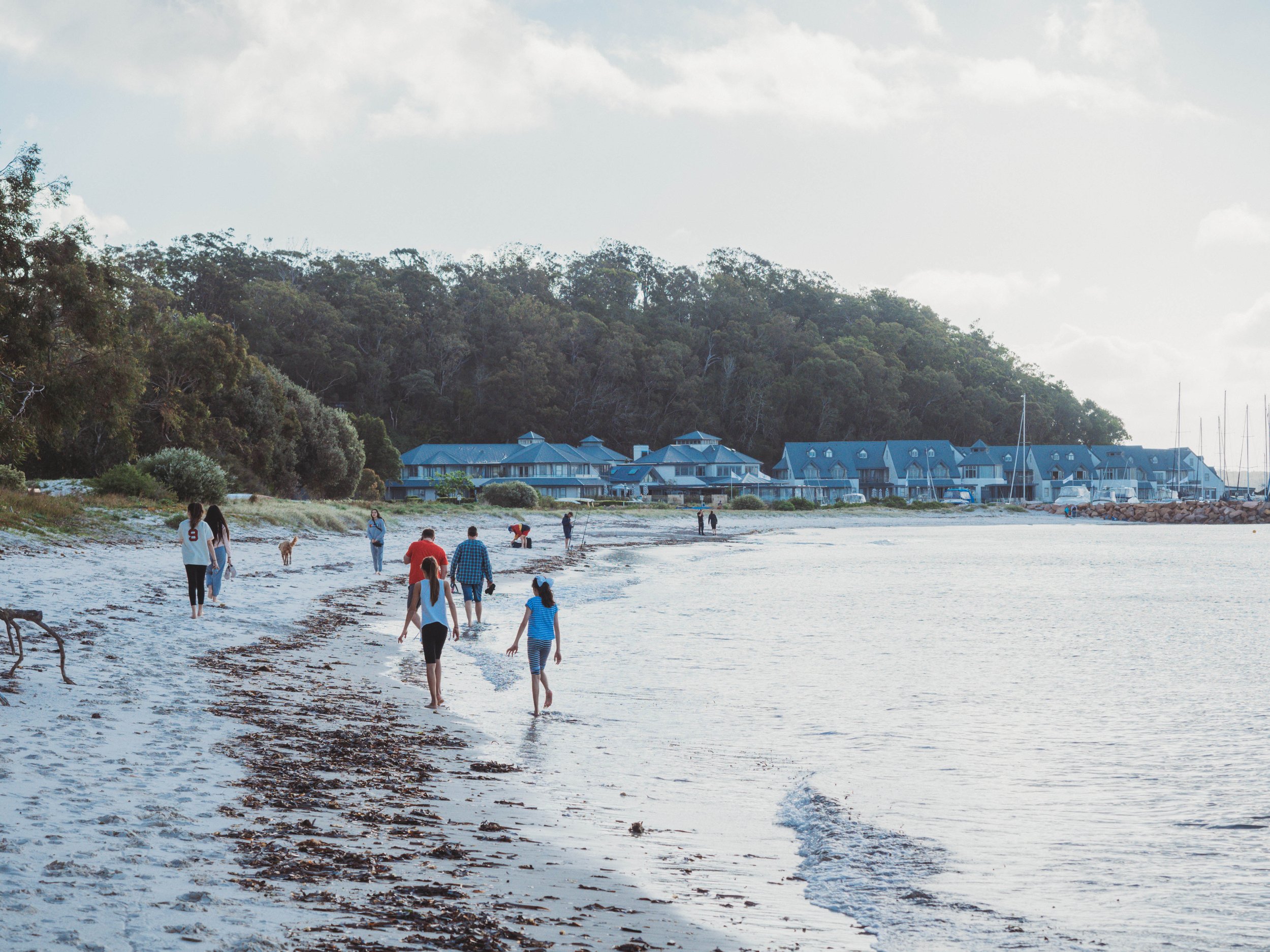
We are aiming to enlist the help of dog walkers, local beach-goers, fishers and boaters to become members of our ‘seagrass storm squad’ and be part of the solution.
We need your help to bring Posidonia back!


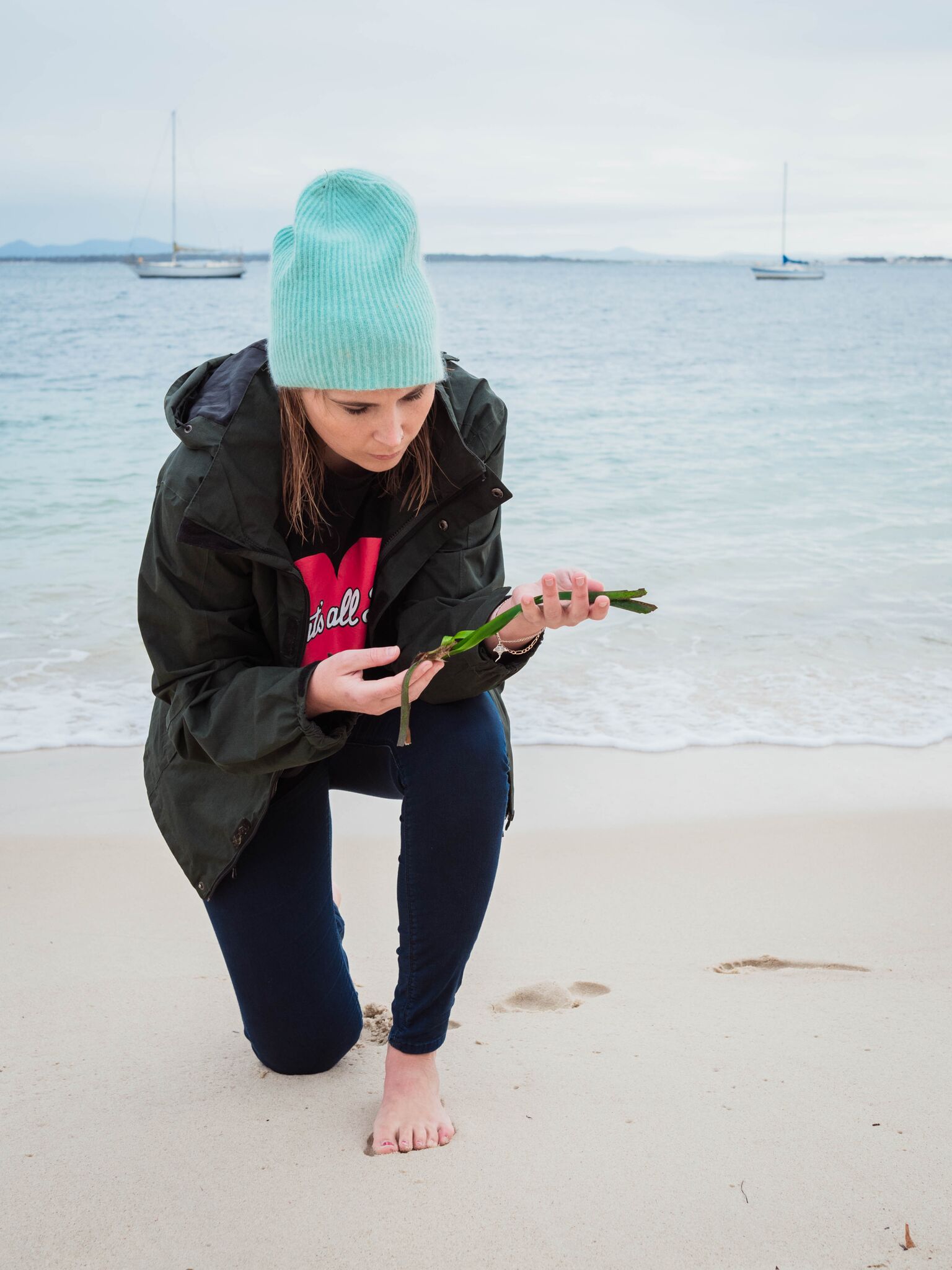
Photos courtesy of Harriet Spark
How to become a
Storm Squad member
The Posidonia shoots that you will be collecting will be used as donor shoots in restoration.
To be able to be replanted, the shoots you collect must be healthy, living and have some rhizome
(the “trunk”-like part at the bottom of the shoot where energy for growth is stored).
Not sure what this means?
Don’t worry, we’ll show you what you need to know.
Posidonia australis – what does it look like?
Healthy, living Posidonia australis is vibrant green, with long, wide leaves growing straight upward from a woody base that runs flat along the seafloor – the rhizome. The rhizome looks brown and woody and is usually quite stiff. These are just like the long, horizontal runners found on strawberry plants. There may be multiple shoots coming from a single rhizome, and often you will see roots attached as well.
When it is washed ashore, it looks:
Bright, vivid green, sometimes a little brown on the tip
1-1.5cm wide leaves (about one finger width)
Long leaves, usually between 10cm-40cm


Tips for collecting Posidonia shoots
Look for shoots with:
Green leaves, not too dry or stiff
A brown woody rhizome attached
If the leaves are not attached to a rhizome or are a muddy brown colour, then you should leave them on the beach. Seagrass wrack supports a diverse community of organisms, such as insects, crustaceans, amphipods, and even birds!

Don’t be fooled by a similar seagrass species, Zostera!
Posidonia and Zostera are two seagrasses that can be found in the waters of New South Wales. They look very similar when washed ashore and can easily be confused!
Tip! Zostera has much narrower and softer leaves with a very small rhizome.
You should leave washed up Zostera shoots on the beach.

What do I do with the collected Posidonia?
We’ve installed Posidonia collection stations where you can drop off the shoots you’ve found.
Collecting in Gamay (Botany Bay)?
In Gamay there is a collection station on the Kamay Wharf at La Perouse on the northern side of the bay. The shoots you collect from around the bay will be replanted in restoration sites at Frenchmans Bay, Kurnell and Penrhyn Estuary.

Collecting in Bundeena or Pittwater?
The Sydney Harbour Project Restore team has collection stations at Bundeena (ferry wharf) and Palm Beach (The Joey Palm Beach Cafe wharf). These shoots will be replanted in sites around Sydney Harbour.

When is the best time to look for Posidonia shoots?
The best time to look for Posidonia is:
Just after a morning high tide starts to recede, leaving the strands of broken Posidonia washed up on the beach
Because Posidonia can be uprooted by currents or large swells, shoots can wash up after storms, windy days or on days where strong winds are blowing onshore at your stretch of beach.
Do I need to bring anything when I go out to collect?
Yes! It’s a good idea to bring:
A damp bag, bucket or container to carry collected shoots
Sun protection (hat, sunscreen, sunglasses)
Gloves, such as gardening gloves, for searching through seagrass ‘wrack’. These will protect you from any sharps such as glass, or potentially harmful marine critters.
A second bag to collect any plastic debris or rubbish you may find.
Safety! When collecting, please don’t touch:
Jellyfish
Blue bottles (these can still sting after they die!)
Fish – these often have sharp spines that can inflict a nasty cut
Blue ring octopus
Sharps (broken glass etc), unless you can safely collect and dispose of them


Collection permit
The NSW Department of Primary Industries and Regional Development allows persons to remove up to 20 kg/day of seagrass ‘wrack’ from beaches or the intertidal zone for personal use without a permit.
As this restoration is also part of a research project, we are also operating under a Section 37 Fisheries Management Act Collection Permit, which allows the permit holder (Professor Adriana Vergés) and additional people (i.e. volunteers/citizen scientists) to collect detached seagrass shoots. For details on this permit please contact us.